


As the days shorten and the brisk Connecticut winter settles in, many families caring for loved ones with dementia notice a challenging shift. As early as 3:00 PM, a phenomenon known as “sundowning” can take hold—a period of increased confusion, anxiety, and agitation that coincides with the fading daylight.
In the winter, the “witching hour” arrives earlier and lasts longer, placing an immense emotional strain on both residents and their caregivers. However, modern sundowning dementia treatmentshave moved beyond simple sedation. At The Greens at Greenwich, we utilize a sophisticated blend of Light Therapy and Creative Arts Therapy to reset circadian rhythms and provide a sense of purpose during these difficult hours.
What Causes Sundowning in the Winter?
Sundowning isn’t a disease itself, but a symptom of Alzheimer’s and other forms of dementia. It is believed to be tied to a disruption in the body’s internal biological clock (circadian rhythm).
When winter arrives, the lack of Vitamin D and the early onset of darkness can exacerbate this confusion. For a senior with memory loss, the transition from day to night is not just a change in time; it is a loss of visual cues and a trigger for deep-seated “late-day” anxiety.
The Role of Light Therapy in Sundowning Dementia Treatments
One of the most effective non-pharmacological interventions for sundowning is Bright Light Therapy (BLT).
How it works:
Exposure to specific wavelengths of light—similar to natural sunlight—helps regulate the production of melatonin and cortisol. By utilizing high-intensity light boxes or specialized circadian lighting systems, we can:
- Reset the Biological Clock: Helping seniors differentiate between “active time” and “rest time.”
- Improve Sleep Patterns: Reducing the nighttime wakefulness that often follows a sundowning episode.
- Boost Mood: Counteracting Seasonal Affective Disorder (SAD), which frequently co-occurs with dementia.
At The Greens at Greenwich, our environment is designed to maximize natural light and complement it with therapeutic lighting to help our residents stay oriented and calm as the sun sets.
Beyond the Bulb: The Power of Creative Arts Therapy
While light therapy addresses the biological triggers of sundowning, Creative Arts Therapy addresses the emotional and cognitive triggers. When a senior becomes agitated in the late afternoon, they are often seeking a way to communicate an unmet need or a sense of displacement.
As a leader in Creative Arts Therapy in Connecticut, we use the following modalities to combat sundowning:
1. Music Therapy
Music has a unique “back door” into the brain. Playing familiar melodies from a resident’s youth during the late afternoon can bypass confusion and trigger “reminiscence,” which lowers cortisol levels and replaces agitation with joy.
2. Art & Drama Therapy
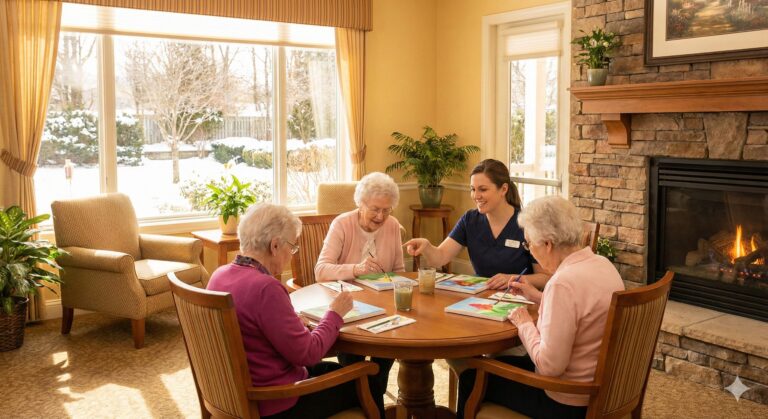
Engaging the hands and the imagination provides a healthy outlet for restless energy. Instead of pacing or wandering—common sundowning behaviors—our residents might engage in a tactile art project or a “playback theater” session. These activities provide a sense of agency and accomplishment, the ultimate antidote to the helplessness experienced during a sundowning episode.
Why a “Social Model” of Care Matters
Many institutional settings respond to sundowning with increased medication or physical restrictions. The Greens at Greenwich operates on a Social Model of Care. This means we look at the resident as a whole person, not a diagnosis.
By integrating residents into a vibrant, small-scale community where they are known and celebrated, the “fear” of the evening is replaced by the “warmth” of social engagement. Our specialized dementia care programs are intentionally designed to be high-engagement during the traditional sundowning hours.
Tips for Families: Managing Sundowning at Home
If you are caring for a loved one at home this winter, consider these strategies:
- Close the Blinds Early: Before sunset, close the curtains and turn on bright indoor lights to minimize the transition to darkness.
- Maintain a Routine: Predictability is the enemy of anxiety. Keep mealtimes and activities consistent.
- Limit Stimulants: Avoid caffeine or heavy sugar in the afternoon.
- Consider Professional Support: If sundowning is becoming unmanageable at home, it may be time to explore a community that specializes in these specific behavioral interventions.
Experience the Difference at The Greens at Greenwich
Sundowning doesn’t have to be a season of exhaustion for your family. Through our award-winning Creative Arts Therapy and our intimate, home-like environment, we help our residents find peace in the evening hours.
Is your loved one struggling with winter agitation? Contact The Greens at Greenwich today to schedule a tour and learn how our unique approach to dementia care can improve your loved one’s quality of life.